
Most Common Liver Disease in India & Ignored Symptoms
The liver plays a crucial role in keeping your body healthy—helping in detoxification, digestion, and metabolism. However, liver diseases in India are increasing rapidly, often without noticeable symptoms in the early stages.
Many people remain unaware of liver damage until it becomes severe. That’s why understanding the most common liver problems and their warning signs is essential.
Why Liver Diseases Are Increasing in India
Modern lifestyle habits are a major cause of rising liver issues:
-
Sedentary lifestyle
-
High intake of processed and sugary foods
-
Obesity and diabetes
-
Alcohol consumption
-
Viral infections like Hepatitis B and C
These factors are making liver disease one of the most common yet overlooked health conditions in India.
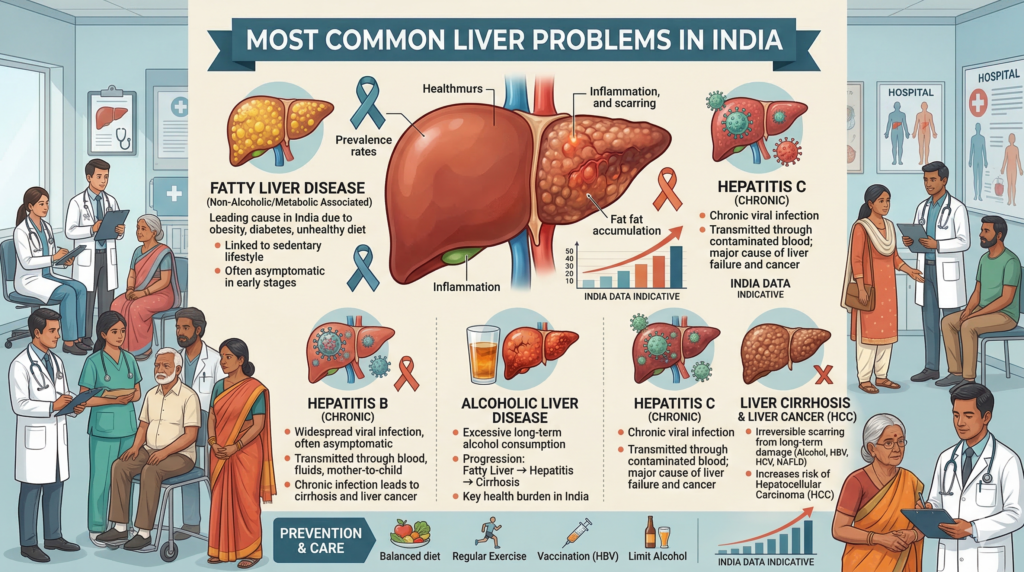
Most Common Liver Problems in India
Fatty Liver Disease (NAFLD / MASLD)
Fatty liver is one of the most common liver disorders today.
-
Caused by fat buildup in liver cells
-
Common in people with obesity and diabetes
-
Can occur even without alcohol consumption
Treatment Options:
-
Weight loss (7–10% reduction can significantly improve liver health)
-
Regular exercise (at least 30 minutes daily)
-
Healthy diet (low sugar, low fat, high fiber)
-
Control of diabetes, cholesterol, and blood pressure
-
Avoid alcohol completely
Viral Hepatitis (A, B, C, E)
A significant health concern across India.
-
Hepatitis A & E spread through contaminated food and water
-
Hepatitis B & C spread through infected blood or unsafe practices
Treatment depends on the type of hepatitis:
Hepatitis A & E:
-
Usually self-limiting
-
Rest, hydration, and proper nutrition
-
Avoid fatty foods and alcohol
Hepatitis B & C:
-
Antiviral medications
-
Regular monitoring of liver function
-
Long-term follow-up to prevent complications
Prevention:
-
Vaccination (especially for Hepatitis B)
-
Safe hygiene and medical practice.
Alcoholic Liver Disease
Caused by excessive alcohol intake over time.
-
Leads to fatty liver, hepatitis, and cirrhosis
-
Increasing among adults due to lifestyle habits
Treatment Options:
-
Complete abstinence from alcohol
-
Nutritional therapy and vitamin supplements
-
Medications to reduce inflammation
-
Regular liver function monitoring
Liver Cirrhosis
A serious condition where liver tissue becomes scarred.
-
Final stage of many liver diseases
-
Affects liver function significantly
Treatment Options:
-
Medications to control symptoms and complications
-
Low-sodium diet (to reduce fluid buildup)
-
Diuretics for swelling (ascites)
-
Regular screening for liver cancer
Liver Cancer
Usually develops from chronic liver disease or cirrhosis.
-
Linked with hepatitis infections
-
Often diagnosed at advanced stages
Treatment Options:
-
Surgical removal of tumor (early stages)
-
Targeted therapy or chemotherapy
-
Radiation therapy
-
Immunotherapy (in selected cases)
Symptoms People Usually Ignore
Liver diseases often begin silently. Early symptoms are mild and frequently ignored.
Commonly Ignored Symptoms:
-
Persistent fatigue
-
Loss of appetite
-
Nausea or vomiting
-
Mild abdominal pain
-
Indigestion or bloating
Warning Signs You Should Not Ignore:
-
Yellowing of skin or eyes (jaundice)
-
Swelling in abdomen or legs
-
Dark urine
-
Pale stools
-
Unexplained weight loss
-
Itchy skin or easy bruising
These symptoms may indicate advanced liver damage and require immediate medical attention.
Why Early Detection Matters
The liver has the ability to repair itself—but only if detected early.
Regular health checkups and liver function tests (LFTs) can help identify problems before they become serious.
How to Keep Your Liver Healthy
-
Maintain a healthy weight
-
Avoid excessive alcohol consumption
-
Eat a balanced and nutritious diet
-
Exercise regularly
-
Get vaccinated for Hepatitis B
-
Avoid self-medication
When to See a Doctor
If you experience any persistent symptoms like fatigue, digestive issues, or jaundice, consult a specialist immediately.
Early diagnosis can prevent serious complications and improve outcomes.
Conclusion
Liver diseases are becoming increasingly common in India, but most cases are preventable.
Ignoring early symptoms can lead to severe health complications. Stay aware, adopt a healthy lifestyle, and prioritize regular health checkups to protect your liver.
Frequently Asked Questions (FAQs): Common Liver Diseases and Their Treatments in India
Question 1: Why are liver diseases increasing in India?
Answer: The rise in liver diseases in India is mainly due to unhealthy lifestyle habits such as poor diet, obesity, diabetes, alcohol consumption, and lack of physical activity. Viral infections like hepatitis B and C also contribute significantly.
Question 2:What is the most common liver problem in India?
Answer: The most common liver condition in India is fatty liver disease (NAFLD/MASLD). It occurs due to fat accumulation in the liver and is commonly seen in people with obesity, diabetes, and sedentary lifestyles.
Question 3: What is the treatment for fatty liver disease?
Answer: Treatment mainly focuses on lifestyle changes such as weight loss, regular exercise, a healthy diet, controlling diabetes and cholesterol, and avoiding alcohol. In early stages, fatty liver can be reversed completely.
Question 4: What is viral hepatitis, and how is it treated?
Answer: Viral hepatitis is a liver infection caused by viruses (A, B, C, E).
-
Hepatitis A & E: Usually treated with rest, hydration, and proper diet
-
Hepatitis B & C: Require antiviral medications and long-term monitoring
Question 5: What is alcoholic liver disease and its treatment?
Answer: Alcoholic liver disease occurs due to excessive alcohol intake over time. Treatment includes: Complete stop of alcohol consumption, nutritional support, Medications for liver inflammation, Regular monitoring Early stages can improve if alcohol is stopped.
Question 6: What is liver cirrhosis and can it be treated?
Cirrhosis is a condition where the liver becomes scarred and loses function. Treatment includes: Medications to manage symptoms, Low-salt diet, Treatment for fluid buildup, Regular monitoring. In advanced cases, a liver transplant may be required.
Question 7: What is the difference between angioplasty and bypass surgery?
Answer: Treatment depends on the stage of cancer and includes surgery to remove tumors, chemotherapy or targeted therapy, radiation therapy, and liver transplant (in selected cases). Early detection improves treatment success.
Question 8: What are the early symptoms of liver disease?
Answer: Early symptoms are often mild and ignored, such as fatigue, loss of appetite, nausea, and mild abdominal discomfort.
Question 9: When should someone see a doctor for liver problems?
Answer: You should consult a doctor if you notice: Yellowing of eyes or skin (jaundice), Abdominal swelling, Dark urine, Unexplained weight loss, Persistent digestive issues.
Question 10 : How can liver diseases be prevented?
Answer: Liver diseases can be prevented by: Maintaining a healthy lifestyle, Avoiding alcohol, Eating a balanced diet, Regular exercise, Getting vaccinated for Hepatitis B, Regular health checkups.