Difference Between Cardiac Arrest and Heart Attack?
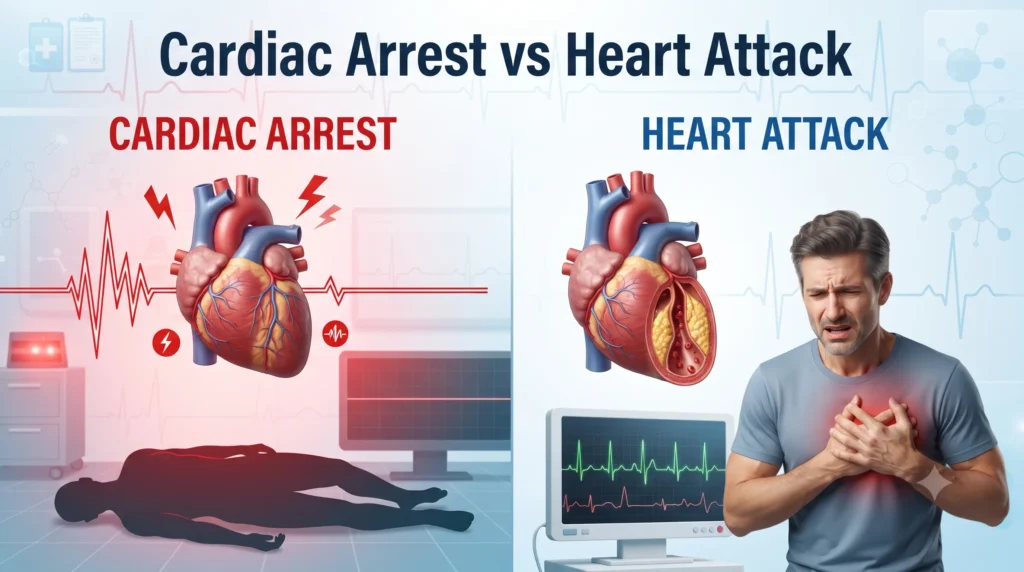
What is the Difference Between Cardiac Arrest and Heart Attack? Many people use the terms heart attack and cardiac arrest interchangeably, but they are not the same condition. While both are serious medical emergencies involving the heart, they differ in their causes, symptoms, treatment, and outcomes. A heart attack occurs when blood flow to the heart muscle is blocked, while cardiac arrest happens when the heart suddenly stops beating effectively due to an electrical malfunction. Understanding the difference can help you recognize the warning signs and seek timely medical care, potentially saving a life. What is a heart attack? A heart attack, also known as myocardial infarction (MI), occurs when one or more of the coronary arteries become partially or completely blocked. This blockage prevents oxygen-rich blood from reaching a portion of the heart muscle. Without adequate blood supply, the affected heart muscle begins to die. The longer the blockage remains untreated, the greater the damage to the heart. Common Causes of Heart Attack Coronary artery disease (atherosclerosis) Blood clot blocking a coronary artery High cholesterol High blood pressure Diabetes Smoking and tobacco use Obesity Physical inactivity Excessive stress Family history of heart disease Symptoms of a Heart Attack Heart attack symptoms often develop gradually over several minutes or hours, although they can also occur suddenly. Common Symptoms Chest pain or pressure (often described as squeezing, tightness, or heaviness) Pain spreading to the left arm, right arm, shoulders, neck, jaw, or back Shortness of breath Cold sweat Nausea or vomiting Dizziness or lightheadedness Extreme fatigue Indigestion-like discomfort Symptoms in Women Women may experience less typical symptoms, including the following: Unusual fatigue Shortness of breath Nausea Pain in the upper back, neck, or jaw Mild chest discomfort rather than severe pain What is Cardiac Arrest? Cardiac arrest is a sudden loss of heart function caused by an electrical problem that disrupts the heart’s normal rhythm. As a result, the heart stops pumping blood to the brain and other vital organs. Within seconds, the person loses consciousness and stops breathing normally. Without immediate treatment, cardiac arrest can lead to death within minutes. Common Causes of Cardiac Arrest Cardiac arrest may occur due to: Ventricular fibrillation (VF) Ventricular tachycardia (VT) Previous heart attack Heart failure Cardiomyopathy Congenital heart defects Severe electrolyte imbalance Drug overdose Electrocution Severe trauma Drowning Symptoms of Cardiac Arrest Cardiac arrest usually occurs suddenly and without warning. Immediate Symptoms Sudden collapse Loss of consciousness No pulse No breathing or only gasping Unresponsiveness Warning Signs Before Cardiac Arrest Some people may experience: Chest pain Palpitations Shortness of breath Dizziness Fainting episodes Treatment for Cardiac Arrest Cardiac arrest requires immediate emergency treatment. Emergency Care Call emergency medical services immediately. Start Cardiopulmonary Resuscitation (CPR) without delay. Use an Automated External Defibrillator (AED) as soon as one is available. Hospital Treatment Advanced Cardiac Life Support (ACLS) Defibrillation Medications to restore heart rhythm Mechanical ventilation Implantable Cardioverter Defibrillator (ICD) for selected patients Treatment of the underlying cause How Can You Prevent Heart Attack and Cardiac Arrest? You can reduce your risk by: Eating a heart-healthy diet rich in fruits, vegetables, whole grains, and lean proteins Exercising for at least 150 minutes per week Maintaining a healthy body weight Quitting smoking and avoiding tobacco products Limiting alcohol consumption Managing stress effectively Controlling blood pressure, cholesterol, and diabetes Taking prescribed medications as directed Undergoing regular health check-ups, especially if you have risk factors When Should You Seek Emergency Medical Help? Call emergency medical services immediately if you or someone else experiences: Chest pain lasting more than a few minutes Pain spreading to the arm, jaw, neck, shoulder, or back Sudden collapse Difficulty breathing Loss of consciousness No pulse or no normal breathing Prompt medical attention can significantly improve survival and reduce complications. Conclusion Although heart attack and cardiac arrest both involve the heart, they are different medical emergencies. A heart attack is caused by a blockage that reduces blood flow to the heart muscle, whereas cardiac arrest is caused by an electrical malfunction that stops the heart from pumping blood effectively. Recognizing the symptoms, seeking immediate medical care, and knowing basic CPR can make a life-saving difference. Adopting a heart-healthy lifestyle and managing risk factors are essential steps in preventing both conditions. Frequently Asked Questions (FAQs) 1. Is a heart attack the same as cardiac arrest? No. A heart attack is caused by blocked blood flow to the heart, while cardiac arrest is a sudden loss of heart function due to an electrical problem. 2. Can someone survive cardiac arrest? Yes, but survival depends on immediate CPR, early defibrillation with an AED, and prompt advanced medical care. 3. Does every heart attack lead to cardiac arrest? No. Most heart attacks do not progress to cardiac arrest, although a severe heart attack can trigger it. 4. Which is more dangerous: a heart attack or cardiac arrest? Both are medical emergencies, but cardiac arrest is immediately life-threatening because the heart stops pumping blood. Without prompt treatment, it can be fatal within minutes. 5.Can a Heart Attack Cause Cardiac Arrest? Yes, A severe heart attack can disrupt the heart’s electrical system and trigger cardiac arrest. However, not every heart attack leads to cardiac arrest, and cardiac arrest can also occur without a heart attack. Call emergency medical services immediately, begin CPR, and use an AED if one is available until professional help arrives.
Difference Between Cardiac Arrest and Heart Attack? Read More »